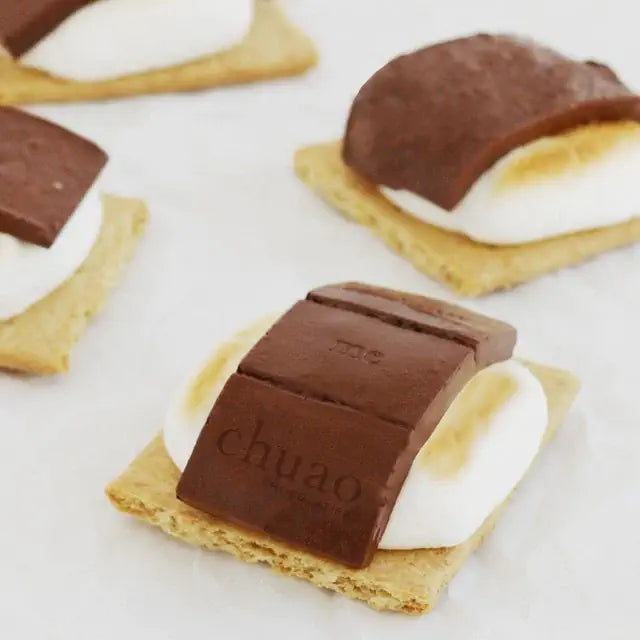


guest post by ashley schuering - https://confessionsofagroceryaddict.com
Whether you're trying to stock up on your favorite Chuao bars, save leftover holiday chocolate, or simply wondering if your freezer is a safe haven for your chocolate stash, the question “can you freeze chocolate?” comes up more often than you'd think. Here's the science-backed truth about what happens when chocolate meets sub-zero temperatures.
Is Freezing Chocolate a Good Idea?
The short answer: it depends on what you're freezing and why. Freezing solid chocolate bars isn't typically necessary for short-term storage since chocolate is shelf-stable at room temperature.
However, freezing can be a smart move in specific situations. For example, if you're stocking up during a sale, need to preserve chocolate for months rather than weeks, or live somewhere with intense heat and no reliable climate control. Freezing can also work well for chocolate desserts like sweet & salty cosmic brownies, chocolate sugar cookies, or chocolate-covered ice cream bars.
That said, freezing isn't risk-free, but don’t worry, food safety isn’t generally a concern. Fat and sugar "bloom" damage the appearance of chocolate but do not limit its shelf life, and chocolate that has "bloomed" is still safe to eat, though it may have an unappetizing appearance and surface texture. The real risk is textural: freezing and thawing can compromise the glossy snap and smooth mouthfeel that makes premium chocolate so enjoyable.
The Chemistry Behind Freezing and Bloom
To understand why freezing affects chocolate, it helps to know what bloom actually is. Chocolate bloom is either of two types of whitish coating that can appear on the surface of chocolate: fat bloom, caused by changes in the fat crystals in the chocolate, and sugar bloom, due to crystals formed by the action of moisture on the sugar.
-
Fat bloom is the more common issue with freezing. Fat bloom happens when the fat in cocoa butter melts and then re-hardens in a messy, unstable way, instead of forming the smooth, even structure you get from properly tempered chocolate. This usually happens when chocolate gets warm (like sitting in a hot car or a sunny kitchen) and then cools down again too quickly. As the fat re-solidifies, it doesn't return to its original neat structure, and that creates the dull, streaky white coating on the surface.
-
Sugar bloom is the other culprit, and it's actually a bigger textural risk with freezing than fat bloom. This happens due to condensation. Sugar bloom occurs when sugar in the chocolate interacts with water or moisture in the surrounding environment. When the water evaporates, it leaves behind rock sugar. This can happen when you pull chocolate out of the freezer; the cold surface meets warmer, humid air, and condensation forms. This creates the perfect conditions for sugar crystals to dissolve and then re-form on the surface, leaving a gritty texture.
Is Bloomed Chocolate Bad for You?
Not at all, but it does affect texture and appearance. Chocolate bloom is safe to eat as long as the chocolate is not spoiled (note: Truly spoiled chocolate is rare given its low moisture content, but there are telltale signs to watch for: an off, rancid smell, a sour or waxy taste, or visible mold which looks fuzzy).
If your chocolate smells fine and simply looks dull or streaky, it's almost certainly just bloom, not spoilage, and perfectly safe to eat. But while you won't get sick from bloomed chocolate, it may not deliver the luxurious experience you're expecting from a premium bar.
With fat bloom, chocolate can taste softer, muted in flavor, and sometimes greasy, losing the nice snap you'd expect from well-tempered chocolate. Sugar bloom tends to be worse because the large, recrystallized sugar crystals create a grainy, chalky texture.
How to Freeze Chocolate to Prevent Bloom and Texture Changes
If you do need to freeze chocolate, a few precautions go a long way:
-
Wrap it tightly. Use airtight packaging, such as plastic wrap followed by a freezer bag or airtight container, to minimize exposure to air and moisture.
-
Thaw gradually. This is the most critical step. Move chocolate from the freezer to the refrigerator for several hours or overnight before bringing it to room temperature. When taken out of storage, chocolate should be given ample time to defrost and acclimate to the ambient temperature. Make sure to keep it sealed and leave it in the refrigerator for a couple of hours, or set it in a cool, dry spot.
-
Avoid condensation. Never unwrap chilled chocolate until it has fully come to room temperature. Why? Unwrapping too early invites moisture straight onto the surface.
-
Skip the freezer when possible. For everyday use, proper storage is essential. That means keeping your chocolate out of the fridge and away from the windowsill, in a cool, dry, dark place around 60-70°F.
-
Mind the clock. While chocolate is technically safe indefinitely in the freezer, quality is a different story. For the best flavor and texture, plan to enjoy frozen chocolate bars within a few months rather than treating your freezer as permanent storage. The longer chocolate sits frozen, the more opportunity there is for subtle bloom or flavor changes to creep in, even with careful wrapping.
Can You Freeze Chocolate Truffles, Bon-Bons, Bark, and Drinking Chocolate?
Solid chocolate bars aren't the only treats you might consider freezing, so how do these other Chuao favorites hold up?
-
Truffles and bonbons generally freeze better than bars thanks to their ganache centers. Because these confections have more dairy, they behave more like ganache and fudge than like pure, tempered chocolate. Store them in an airtight container, and when you're ready to enjoy, thaw slowly in the refrigerator rather than at room temperature to avoid condensation ruining the delicate shell. Move the truffles from the freezer to the refrigerator to defrost, giving the ganache center time to soften gradually along with the outer shell.
-
Chocolate Bark tends to freeze about as well as bars since it's a single layer of tempered chocolate, though any mix-ins (nuts, dried fruit, marshmallows) can introduce extra moisture that increases bloom risk. Wrap tightly and thaw slowly for best results.
-
Drinking chocolate mix is actually the easiest of the bunch. Since it's a dry, shelf-stable powder rather than tempered chocolate, freezing isn't necessary but certainly won’t damage it. These mixes are formulated for long shelf life at room temperature, so save your freezer space for something that actually needs it.
Don't Let Hot Weather Stop Your Chocolate Cravings
For more information on keeping your Chuao chocolate in perfect condition during the summer, including tips for receiving shipments, ideal storage spots, and how to handle chocolate that's arrived slightly soft, check out our full guide to storing and shipping chocolate in a heat wave.
The bottom line: freezing chocolate won't hurt you, but it requires care to preserve the experience you're paying for. So go ahead and satisfy that chocolate craving, even if the forecast calls for heat. Chuao has you covered!